

Who are you saving for?
A savings plan doesn't have to be about you. In urble, you can create one for yourself, or for someone else entirely — a partner, a parent, your own child, a godchild, a wider family member, or really anyone who matters to you. Once it exists, you can invite others to join as observers, so they can see the plan grow, and optionally let them contribute to it too, from their own urble wallet or bank account. A few common patterns: a plan for your child that you share with your partner and grandparents, or a plan for your godchild that you share with their parents.
Who it's for doesn't change how the plan works technically — but it's worth deciding first, since it shapes the next two choices.
Choosing your savings structure
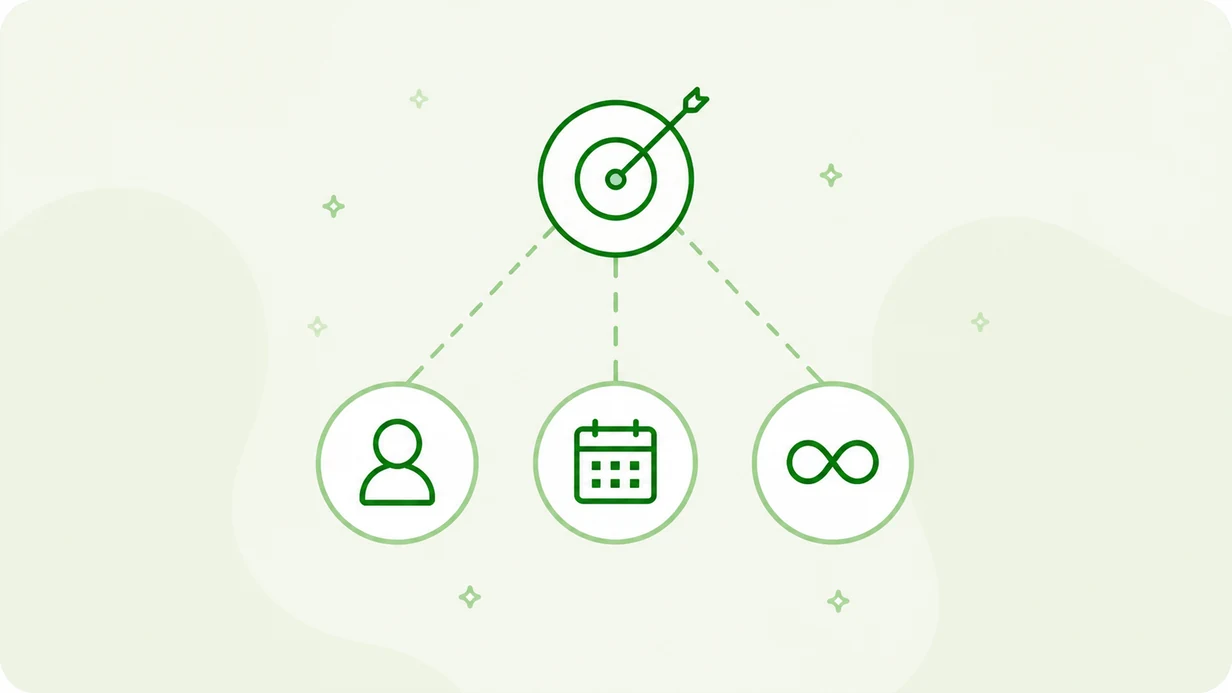
Every urble savings plan takes one of three shapes:
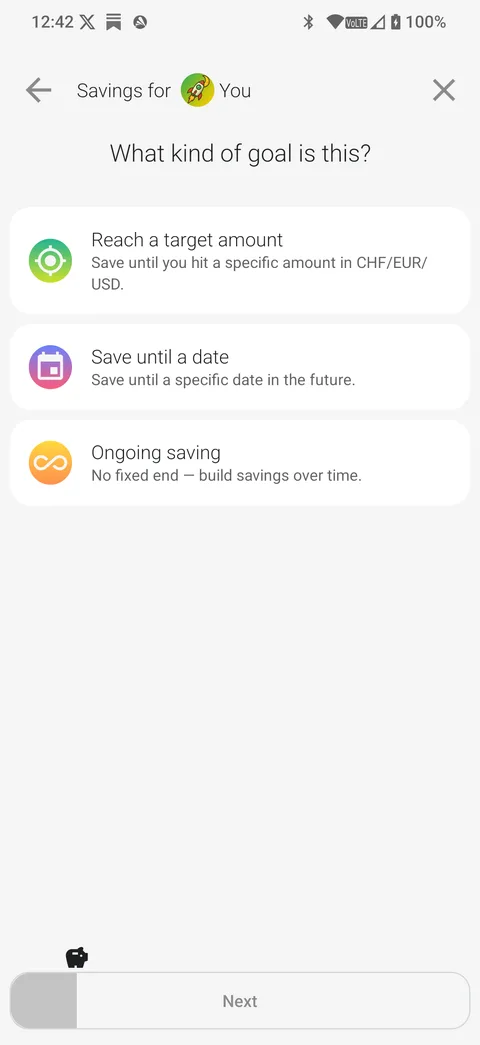
- Reach a target amount: you save until you hit a specific number in CHF, EUR, or USD. Good for goals with a price tag attached: a car, a dream vacation, a specific gift.
- Save until a date: you save until a specific future date, regardless of amount. Good for goals tied to a moment in time rather than a number: an 18th birthday, a wedding, a graduation.
- Ongoing saving: no fixed end. You can deposit and withdraw at any time, like a flexible savings basket. Good for a general cushion or a goal that doesn't have a fixed number or date yet.
One important distinction: contributions to target amount and target date plans are locked once created until the target amount or the target date is reached. This is a deliberate choice, not a technical one (there's no cryptographic lock preventing it), but it exists because these plans are meant for a specific purpose and person. Ongoing plans have no such restriction — deposit or withdraw whenever you like.
Choosing what you save in: stable yield vs. growth
Once you know the shape of your plan, the next decision is what asset it holds. urble currently offers two broad categories:
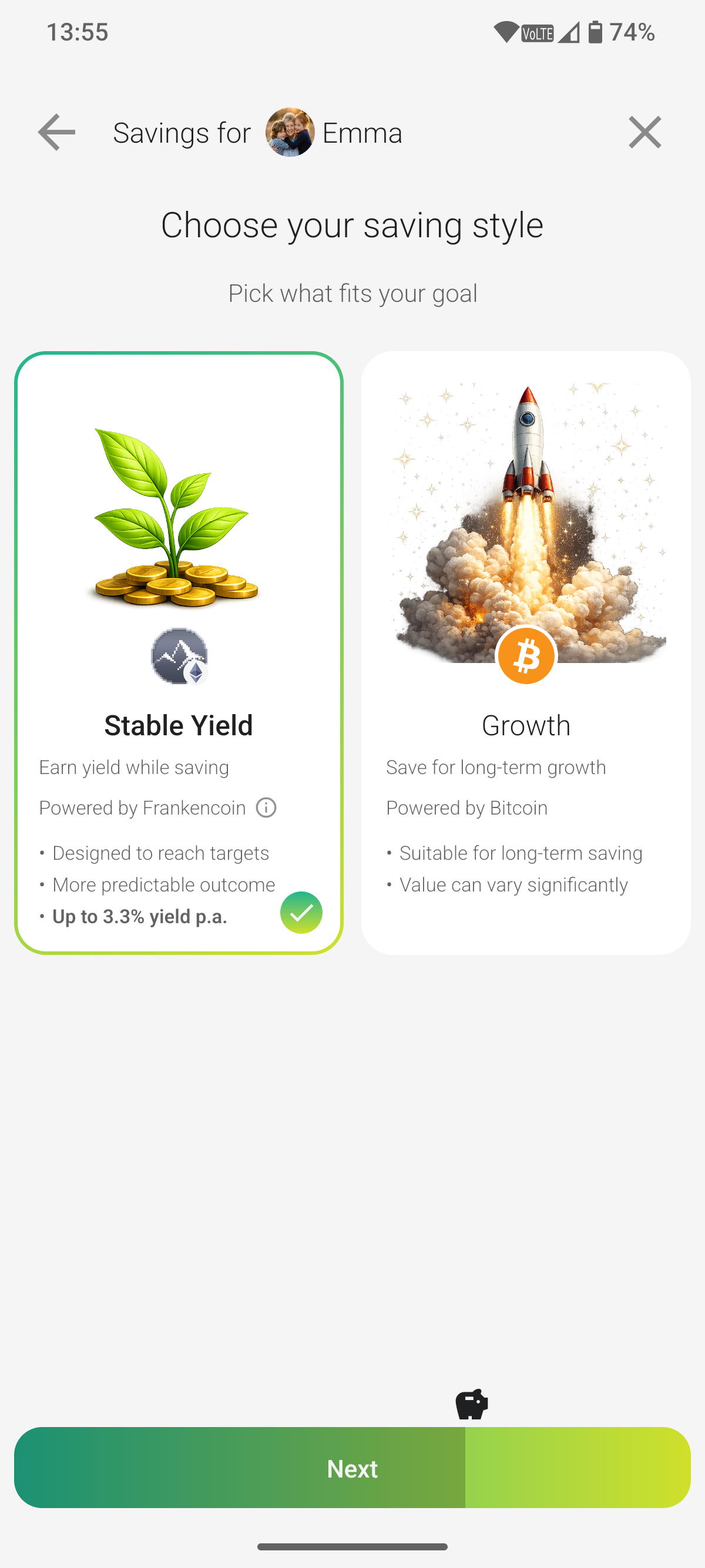
- Stable* yield — currently Frankencoin (ZCHF), a Swiss franc–denominated stablecoin, with a modest variable yield (currently starting around 2.6% p.a.). We plan to expand this to reliable EUR and USD stablecoin options over time.
- Growth assets — currently BTC, ETH, and ADA, with plans to expand into tokenized gold, stocks, and ETFs. These are volatile, but carry higher long-term growth potential meaningfully.
Neither is inherently "better" — it depends on your goal:
| Stable yield | Growth assets | |
|---|---|---|
| Underlying behavior | Stable, tracks its reference currency, modest variable yield | Volatile, with historically strong long-term growth potential |
| Can you forecast the outcome? | Largely yes — the amount at the end stays close to what you put in | Only a probabilistic estimate based on historical performance, not a guarantee |
| Best fit | Goals with a specific number attached — school fees, a wedding, an emergency fund | Long time horizons (10+ years); goals where participating in growth matters more than hitting an exact figure |
| Risk tolerance needed | Medium — the main risk is a modest, variable yield | Higher — you need to tolerate real short-term price swings |
As a rule of thumb: growth assets tend to suit long-horizon goals where the exact amount isn't critical (an 18th birthday plan has years to ride out volatility), while stable yield tends to suit target-amount goals where you need the number to actually be there when you need it. There are valid exceptions in both directions, so this is a starting point, not a rule.
It's also worth asking what the alternative is. Leaving money in an ordinary bank account isn't a neutral, risk-free choice either — it comes with its own quiet costs. We've written about both sides of this: Why Your Savings Account Is Losing You Money and Why 0.2% Inflation Doesn't Match Your Grocery Bill.
Match the asset to the goal
The shorter and less flexible your goal is, the more important it becomes to consider what would happen if the selected asset lost value shortly before you needed the money.
For example, an asset with substantial price volatility may be unsuitable if you need a specific amount for a payment on a fixed date.
A longer and more flexible goal may give you more time to respond to market movements. However, time alone does not make an asset safe or guarantee that it will recover.
Your choice should reflect:
- How important the target amount is
- When you expect to need the assets
- Whether the date is flexible
- How much loss you could tolerate
- Whether you understand the selected asset
urble provides tools to help you organise a savings goal. It does not determine which asset is suitable for your personal financial situation.
Seeing your forecast
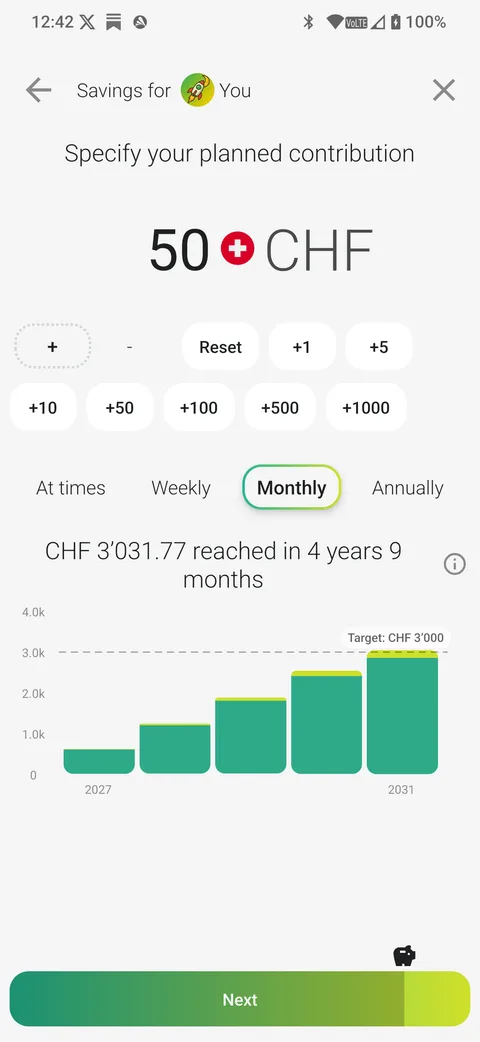
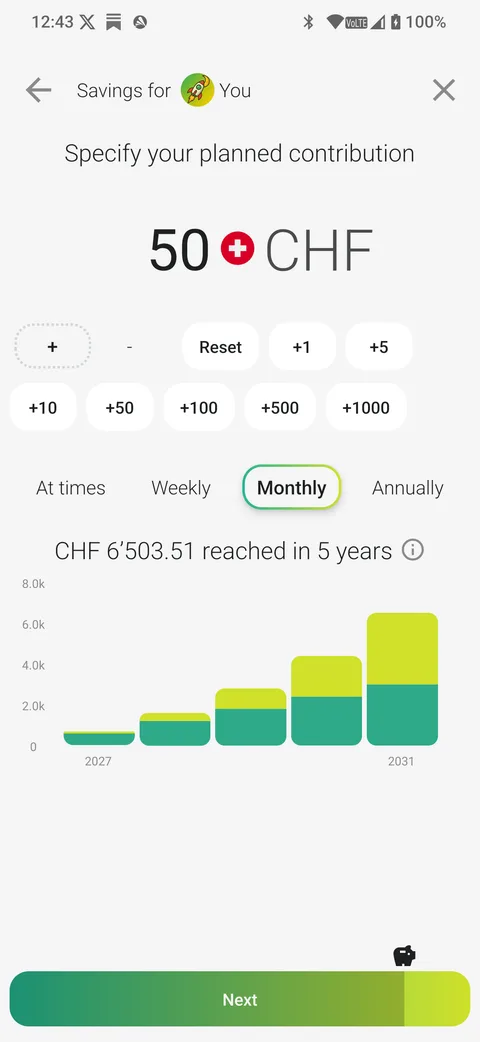
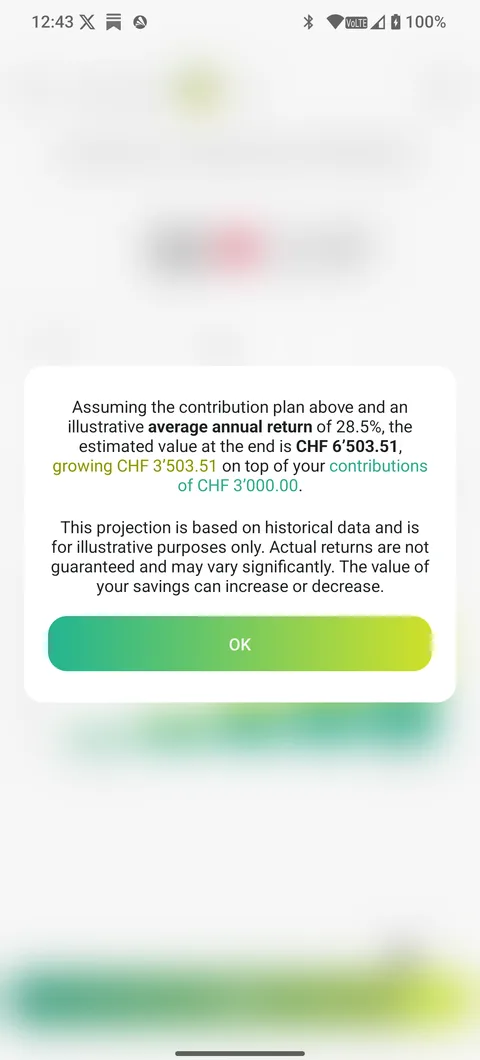
Whichever structure and asset you choose, urble shows you a chart projecting how your plan could develop, based on your contribution amount and frequency. For stable yield plans, this is a fairly tight, predictable projection. For growth assets, urble shows an illustrative estimate based on historical average returns — clearly marked as an estimate, not a guarantee. As the app itself puts it: actual returns aren't guaranteed and may vary significantly, and the value of your savings can increase or decrease. Use the chart to get a feel for the shape of the outcome, not as a promise of what you'll end up with.
Putting it together: a quick walkthrough
1. Start a new savings plan and choose the goal type
From the Savings tab, start a new plan and choose who it's for. Then pick your structure: Reach a target amount, Save until a date, or Ongoing saving.
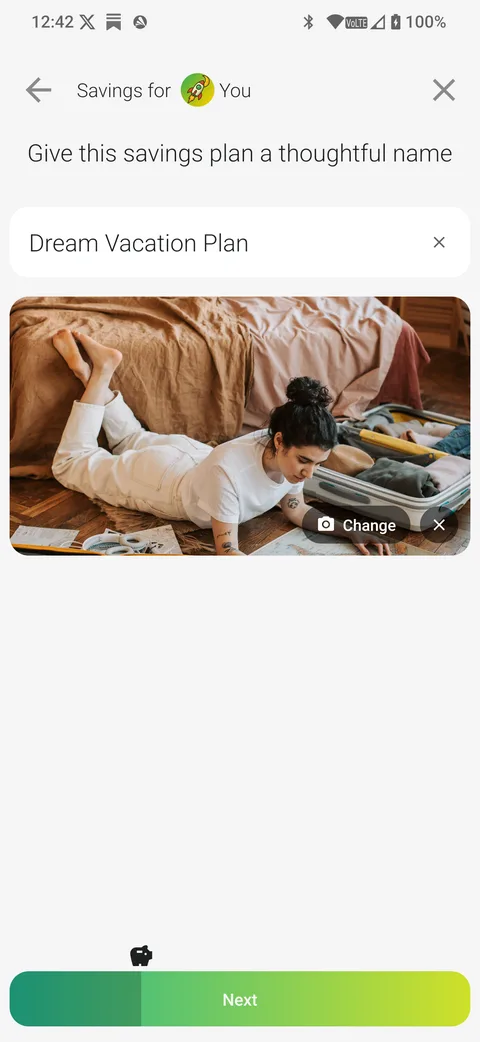
2. Name your plan and add a cover photo
Give it a name that reflects the goal — this is what you and anyone you invite will see. A cover photo is optional but makes the plan feel more personal.
3. Set your target (amount or date), or your saving horizon
For target amount plans, set the CHF/EUR/USD figure you're aiming for. For target date plans, pick the date — either directly or using one of the quick options (1, 3, 5, 10+ years). For ongoing plans, pick a horizon to base your forecast on; this doesn't lock anything in, it just shapes the chart.
4. Set your planned contribution
Choose an amount and how often you'll contribute — at times, weekly, monthly, or annually. As you adjust this, the forecast chart updates live to show your projected outcome.
5. Choose your saving style: stable yield or growth
Pick the category that fits your goal, per the comparison above.
6. Choose the specific asset
For stable yield, that's currently Frankencoin (ZCHF). For growth, choose between BTC, ETH, or ADA.
7. Review and confirm
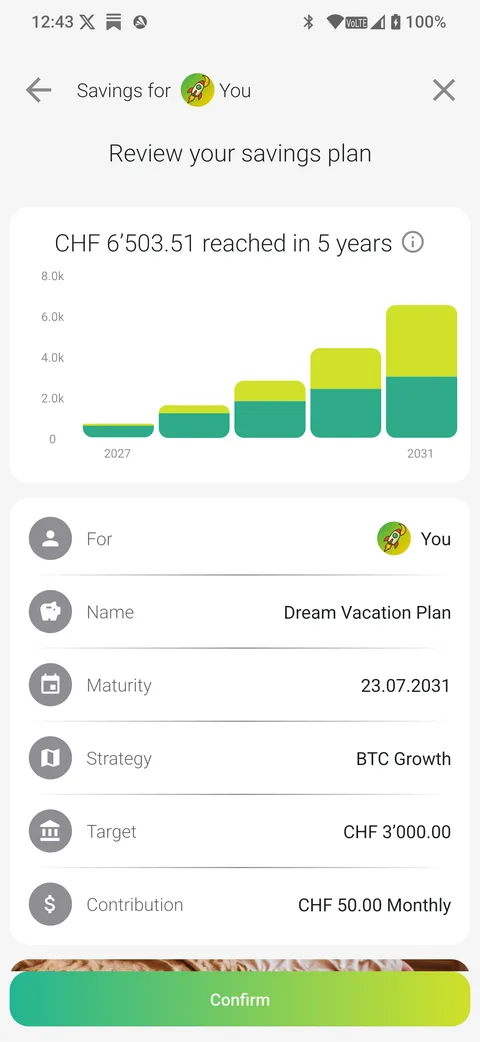
urble shows a final summary — who it's for, the plan name, target/maturity, strategy, asset, savings yield or projected return, and your contribution schedule. Check it over and confirm to create the plan.
8. Fund your plan
Creating a savings plan does not fund it automatically.
To add CHF or EUR by bank transfer, see:
- How to Complete Identity Verification with Our Partners
- How to Set Up Bank Transfers and Standing Orders
You can also contribute supported crypto assets that you already hold, using the deposit options shown in urble.
* The word stable refers to the asset’s objective of tracking its reference currency. It does not mean that its value, yield or availability is guaranteed.